Facing Eviction in the Capital Region? Start Here
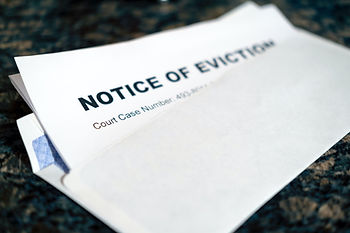
Falling behind on rent or receiving eviction papers can feel overwhelming. However, receiving a notice does not necessarily mean you must leave immediately. Help may be available through legal services, emergency-assistance programs, tenant advocates, and community organizations. Taking action early gives providers more time to identify possible options.
Gather Your Documents
Keep every document connected to your housing situation, including:
Your lease or rental agreement
Rent receipts and payment records
Letters, texts, or emails from your landlord
Rent demands, termination notices, petitions, and court papers
Proof of household income
Identification for household members
Public-benefit or rental-assistance decisions
Any written payment agreement
Write down important dates and keep screenshots of communications. Bring these documents when contacting an agency or attending court.
Contact Legal Aid as Soon as Possible
The Legal Aid Society of Northeastern New York provides civil legal assistance to eligible residents of Albany, Rensselaer, and Schenectady counties.
Legal Line: 833-628-0087 Hours: Monday–Friday, 9:00 a.m.–5:00 p.m.
Call even if you are unsure whether your paperwork is an eviction notice or court filing. Legal Aid can screen your situation and explain what assistance may be available.
Apply for Emergency Assistance Through Your County
County Departments of Social Services may provide emergency assistance for eligible households facing eviction, homelessness, or another housing crisis. You do not necessarily have to receive ongoing public assistance to ask about emergency help.
Albany County
162 Washington Avenue, Albany, NY 12210
518-447-7300
Rensselaer County
1600 Seventh Avenue, Troy, NY 12180
518-266-7800
Schenectady County
797 Broadway, Schenectady, NY 12305
518-388-4470
Eligibility, documentation requirements, and available funding can change. If assistance is denied, ask for the decision in writing. Another program may require proof that you first applied through DSS.
Albany County Residents Can Contact United Tenants
United Tenants of Albany provides housing counseling and may offer emergency rental assistance to eligible Albany County residents. Its court advocate also supports tenants in eviction proceedings in Albany.
Walk-in location: 255 Orange Street, Suite 104, Albany
Housing Hotline: 518-436-8997, extension 3
United Tenants recommends bringing your lease, court papers, notices, rent records, proof of income, identification, and any DSS acceptance or denial letter.
5. Do Not Ignore Court Papers
A rent demand or termination notice is different from a petition containing a court date. If you receive court papers:
Read every page.
Confirm the court location, date, and time.
Contact Legal Aid immediately.
Attend court unless an attorney or the court specifically tells you otherwise.
Bring your documents and proof of any pending assistance application.
Ask questions if you do not understand an agreement before signing it.
Missing court can result in a default judgment. Even if you missed your date, contact the court and Legal Aid as soon as possible to ask whether any options remain.
Know the Difference Between a Notice and an Eviction
In New York, a landlord cannot legally remove you simply by telling you to leave, changing the locks, or putting your belongings outside. Generally, a landlord must bring a court case and obtain a judgment before a sheriff, marshal, or constable can conduct an eviction.
A formal 14-day Notice of Eviction means the case has reached an urgent stage. Contact Legal Aid and the court immediately. Depending on the circumstances, a tenant may be able to ask the court to delay or stop the eviction through an Order to Show Cause.
If a landlord locks you out without a court-ordered eviction and you have lived in the home for more than 30 days, New York Courts advises calling the police.
Ask for Help With the Follow-Through
Finding a phone number is not always enough. People may need support gathering documents, understanding next steps, communicating with agencies, addressing transportation or phone barriers, and following up on applications.
Stability Through Advocacy, Inc. provides low-barrier navigation, advocacy, practical support, and connections to community resources for people experiencing housing instability.
Visit stayny.org to learn more or request support.
This guide provides general information and is not legal advice. Programs, eligibility requirements, funding, and hours may change. Contact each organization directly to confirm current availability.
Updated September, 2026
